Most people make less than they expect. From what I see in the numbers here, domain flipping can bring in a few hundred dollars a year on the low end, and $5,000 to $15,000+ a year for people with stronger buying habits and more inventory. But the catch is simple: low sell-through rates, renewal costs, and marketplace fees cut profit fast.
If I had to sum it up in plain English, it would be this:
- A big sale does not mean big profit
- Most domains do not sell each year
- Renewals can eat your margin
- Commission fees often take 10% to 30%
- Net profit matters more than sale price
A few numbers make the point fast:
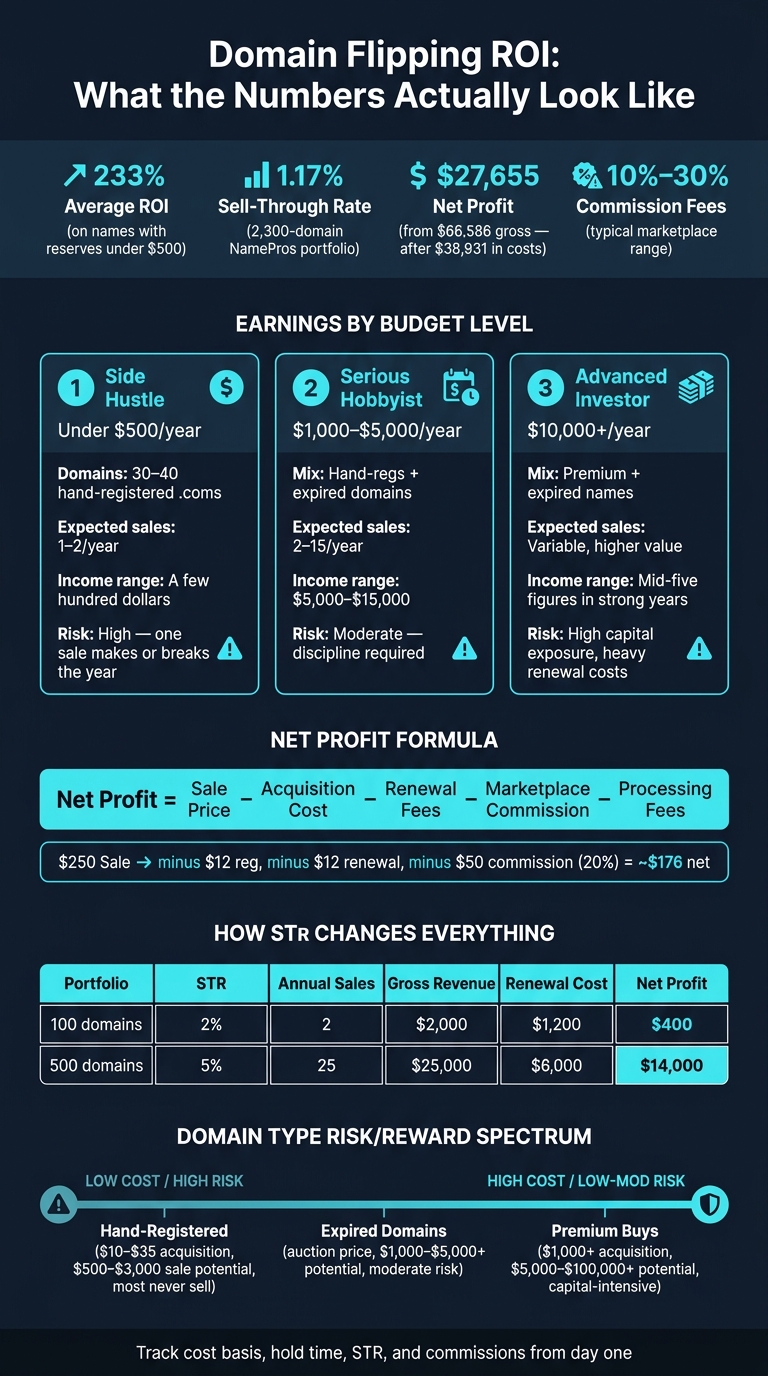
- One 2025 auction data point showed 233% average ROI on names with reserves under $500
- A NamePros case study showed a portfolio of 2,300 domains sold just 27 names, or about 1.17% STR
- Those sales brought in $66,586, but net profit was $27,655 after $38,931 in costs
- A portfolio of 500 domains at 2% STR and $1,000 average sale price can end up with only about $2,000 net profit after commission and renewals
The short version: you can make money flipping domains, but only if you buy low, keep holding costs under control, and sell often enough to cover the many names that never move.
Here’s the fast breakdown:
| Budget | What it often looks like | Income range |
|---|---|---|
| Under $500/year | Hand registrations, few sales, side hustle level | A few hundred dollars if one sale lands |
| $1,000: $5,000/year | Mix of hand-regs and expired domains | About $5,000: $15,000 in a solid year |
| $10,000+/year | Premium and expired names, more cash at risk | Mid-five figures in a strong year, but costs can get heavy |
I’d treat domain flipping like inventory math, not easy money: track cost basis, renewals, commissions, hold time, and sell-through rate from day one.
Domain Flipping ROI Breakdown: Real Numbers by Budget Level
The Math Behind ROI: Profit, Fees, and Sell-Through
A Simple Formula for Net Profit
Net profit is the money left after every cost is paid:
Net Profit = Sale Price − Acquisition Cost − Total Renewal Fees − Marketplace Commission − Payment Processing/Escrow Fees
Here’s what that looks like in practice. A $250 sale sounds decent at first glance. But after a $12 registration, a $12 renewal, and a 20% commission, you’re left with about $176.
That’s why it helps to price from the bottom up, not the top down. Start with what you want to keep, then work backward:
(Desired Net Profit + Acquisition Cost + Renewal Fees) ÷ (1 − Commission Rate) = Asking Price
Use that number as your asking price.
Once net profit is clear, the next thing that changes everything is how often domains sell at all.
How Sell-Through Rate Changes the Whole Business
STR is the share of your portfolio that sells each year. And this is where a lot of domain math gets sobering fast. One sale can look great on its own, but a pile of renewals in the background can eat through that margin.
Say you own 500 domains and your STR is 2%. That means 10 sales per year. If the average sale price is $1,000, gross revenue comes to $10,000. Now subtract a 20% marketplace commission, or $2,000, plus annual renewals on all 500 domains at $12 each, or $6,000. What’s left is roughly $2,000 in net profit on $10,000 in gross sales.
The part that stings is simple: the other 490 domains still cost money every year.
STR often changes portfolio math more than sale price does. Even a small jump can shift the picture in a big way:
| Portfolio Size | STR | Annual Sales | Gross Revenue | Renewal Cost | Net after commission and renewals |
|---|---|---|---|---|---|
| 100 domains | 2% | 2 | $2,000 | $1,200 | $400 |
| 500 domains | 5% | 25 | $25,000 | $6,000 | $14,000 |
A low STR with a big portfolio can push you into the red without much warning. More domains doesn’t always mean more profit. In many cases, it just means more renewals.
Holding Time and Renewal Costs
Time has a way of quietly shaving down returns.
A domain bought for $10 and sold for $500 nets about $378 after one year with a 20% commission. Hold that same domain for 10 years, and renewals of $12 per year cut the net down to about $270. The sale price stayed the same. The hold time did not.
This gets tougher with premium TLDs. A .ai or .io domain can cost $30 to $70 per year to renew. If the name sits for three years, you’ve spent $90 to $210 just to keep it before making a single dollar.
A simple gut check helps here: if you wouldn’t buy the name today at its current carrying cost, it may not deserve another renewal. And once you start looking at domains that way, the numbers shift again based on budget, buying approach, and portfolio quality.
sbb-itb-96552b7
Expected Earnings at Different Budget Levels
Under $500 per Year: Side Income Territory
With a $500 yearly budget, you're usually working in the hand-registration lane. That amount covers about 30: 40 hand-registered.com domains at roughly $10: $15 per year to register and renew.
At this level, a fair target is 1: 2 sales per year. And that's where the math gets pretty simple. If you land one sale in the $800: $1,000 range, it can pay for your yearly renewals and still leave you with a few hundred dollars in net profit after commissions.
The catch? Your year often comes down to whether that one sale happens in time to cover renewals before the bills stack up.
$1,000, $5,000 per Year: Serious Hobbyist Range
Once your yearly budget hits $1,000: $5,000, you can start mixing hand registrations with expired domain purchases. That opens up more options and, in many cases, better names.
At a 1%: 3% sell-through rate, that can mean about 2: 15 sales per year. If your average sale price lands around $2,000: $3,000, yearly profits can reach $5,000: $15,000 if you buy with discipline.
A good example comes from the 2024 NamePros case study mentioned earlier. On the high end, it showed 27 sales from a large portfolio, with $27,655 in net profit after $38,931 in total expenses.
That kind of result shows the upside. It also shows that costs can get big fast, even before profit shows up.
$10,000+ per Year: Larger Upside, Larger Risk
At $10,000+ per year, you're no longer just picking through low-cost names. You're often buying higher-priced expired domains and premium names, where single sales can range from $2,000 to $10,000+.
In a strong year, mid-five-figure annual profits are possible. But this tier cuts both ways. Bigger portfolios mean more renewals, more auction spending, and more money tied up in inventory. It's not hard for yearly carrying costs to reach tens of thousands of dollars before you close even one sale.
Across all three tiers, portfolio quality matters more than size. After that, the next big factor is where you buy and how you track ROI.
Where the Money Is Won or Lost
Acquisition Cost: Hand-Regs vs. Expired Domains vs. Premium Buys
Acquisition cost sets your profit ceiling. Pay too much at the start, and the math gets tight fast.
| Domain Type | Acquisition Cost | Sale Potential | Risk Level |
|---|---|---|---|
| Hand-registered domains | Low ($10: $35) | $500: $3,000 | High: most never sell; volume required |
| Expired domains | Medium (auction price) | $1,000: $5,000+ | Moderate: existing traffic or backlinks help |
| Premium buys | High ($1,000+) | $5,000: $100,000+ | Low to moderate: more capital at risk, longer hold |
Hand-regs are cheap, which is the appeal. But cheap doesn't mean easy. Most of them never sell, so you usually need a lot of names in play to make the model work.
Expired domains sit in the middle. They cost more, usually through auctions, but they may come with traffic or backlinks that help support resale value.
Premium buys are a different game. You're putting up $1,000 or more up front, with sale potential that can run from $5,000 to $100,000+. The upside is bigger, but so is the amount of cash tied up while you wait for the right buyer.
Pricing, Listing, and Marketplace Fees
Commissions are one of the fastest ways profit disappears. Afternic charges 15%: 20%, and marketplace fees can reach 30% on some listings. If you don't build that into the asking price before the listing goes live, you're setting yourself up to lose margin.
Clear Buy It Now pricing also tends to convert better than "make offer" listings, especially at lower price points where buyers want a simple transaction. In plain English: many buyers don't want a back-and-forth. They want to click, pay, and move on.
So before you publish any listing, make sure the BIN price already covers the commission tier for that marketplace.
Once the price works on paper, the next step is finding and tracking names that can actually clear that margin.
When to Hold, When to Sell, When to Drop
A domain shouldn't sit in your portfolio forever just because you own it. If it has had zero inquiries in three years, or if holding costs exceed 50% of realistic market value, drop it.
That's the part many people hate, but it's where discipline pays off. A weak name with renewal fees attached can quietly drain cash year after year.
That is why sourcing and tracking tools matter as much as the buy itself.
How I Turned $11 into $3000 flipping a domain (Real Example)
Tools to Source Domains and Track ROI
The right tools matter because ROI comes down to three things: what you buy, where you list it, and how fast it sells.
Buying and Research Tools: GoDaddy, Namecheap, and ExpiredDomains.net

Use GoDaddy and Namecheap for hand registrations. Use ExpiredDomains.net to filter expired domains by backlinks, traffic history, and age. If you find stronger expired names, bid through GoDaddy Auctions. Before you place a bid, check sales data. That's the fastest way to avoid paying too much.
Buying is only part of the job. A domain still needs the right price and the right place to sell.
Selling and Distribution: Afternic
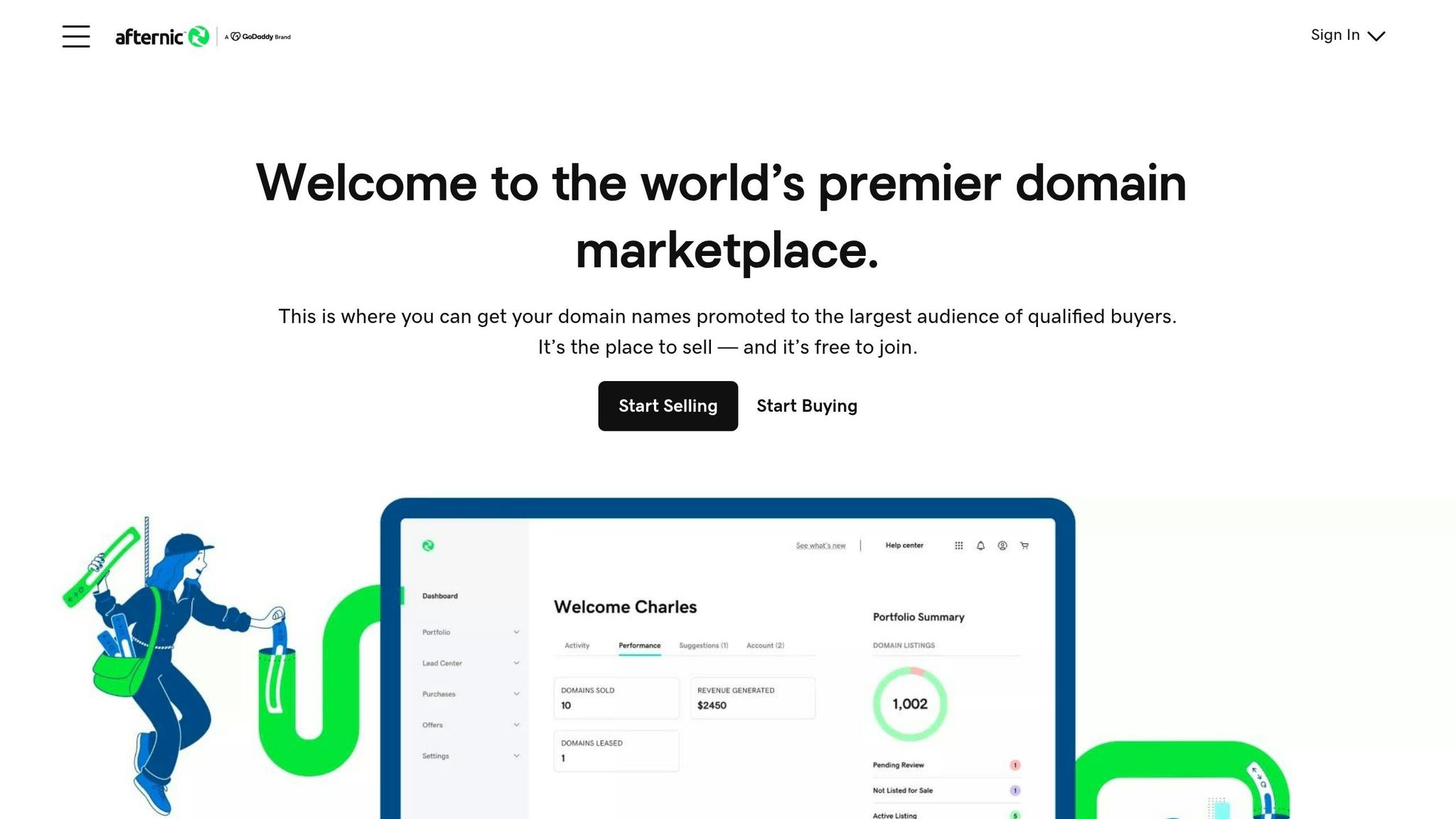
Afternic, owned by GoDaddy, syndicates listings across hundreds of registrars through its Premium Network. That gives your domains more buyer exposure and helps listings get in front of people sooner.
Conclusion: Can Domain Flipping Become Real Income?
Once sourcing and listing are set up, profit comes from discipline, not luck.
Yes, domain flipping can become real income, but only if the numbers work from day one. Your acquisition costs need to stay low. Your renewals need to stay under control. And your pricing needs to cover fees. The best way to think about domains is simple: treat them like inventory. Track your cost basis, hold time, and buyer interest.
Here’s how the main tools fit into the workflow:
| Tool Role | Platform | Primary Function |
|---|---|---|
| Registrar | GoDaddy, Namecheap | Hand registration and annual renewals |
| Auction Source | GoDaddy Auctions, ExpiredDomains.net | Expired inventory with existing value |
| Marketplace | Afternic | Broad buyer distribution via registrar network |
| AI Automation | Speeder.ai | Sourcing research, landing pages, lead routing, ROI tracking |
The workflow is simple. Domain flipping can bring in side income or more, but ONLY when costs stay low and names actually turn over.
FAQs
How many domains do I need to own before flipping is worth it?
There’s no fixed minimum. You can start with just one domain.
That said, domain flipping tends to work better over time when you build a portfolio. It becomes easier to repeat the process, and some successful investors manage anywhere from a few hundred to several thousand domain names.
If you’re new, quality matters more than volume. Buying a big batch of weak domains can leave you stuck with higher renewal fees and more admin work. And once a portfolio goes past 500 domains, the risk and time commitment often climb fast.
What is a good sell-through rate for a beginner portfolio?
A good sell-through rate for a beginner depends on the portfolio strategy.
For many investors, a common yearly benchmark is 5% to 10%.
If you're working with a premium, high-value portfolio, 1% to 2% per year can still make sense if bigger profit margins make up for the longer holding period.
On the other end of the spectrum, some high-volume segments may hit 70% or more.
How do I know whether to renew a domain or let it expire?
Whether you renew a domain comes down to your plan and how the name is doing.
Before you pay for another year, compare its profit upside with what you've already put into it: the purchase price, renewal fees, and the marketplace commissions you'd likely pay if it sells.
If the domain hasn't brought in interest, traffic, or revenue during your planned holding period, letting it expire may be the better move. The same goes for a domain with little traffic protection or a weak backlink profile.