An expired domain rarely costs just the price you see. In many cases, a $300 auction win turns into $330 to $370 after renewal, transfer, and platform fees. And if a domain has strong links or a solid brand name, the price can jump past $1,000 before extra charges even hit.
If I were buying one, I’d keep four things in mind right away:
- Status comes first: expiring, expired, pending delete, and aged do not mean the same thing
- The buying path changes by status: auctions, closeouts, backorders, drop-catching, and marketplaces each work in a different way
- Your total cost matters more than the bid: fees, renewals, escrow, and time can change the math fast
- A cheap domain can still be a bad buy: spammy links, trademark issues, and long holding time can wipe out margin
A simple rule I’d use: set my max price from the full cost, not from auction hype. That means adding the purchase price, fees, transfer costs, and 2 to 3 years of renewals before I place a bid.
| Domain status | Where I’d look first | Main risk |
|---|---|---|
| Expiring | Registrar auctions like GoDaddy or Dynadot | Owner may still renew |
| Expired | Closeouts, backorders, or drop services | More buyer competition |
| Pending delete | DropCatch, NameJet, or SnapNames | Hard to win by hand |
| Aged | Marketplaces or private sale | Not part of the expired-domain flow |
If my goal were resale, SEO, or outbound sales, I’d use a different ceiling price for each one. Same domain, different math. That’s the big point of this article: buy based on total cost and use case, not just the headline price.
How I Find Expired Domains with Backlink Goldmines (and When They’re Worth It)
Where to find expired domains and how each route works
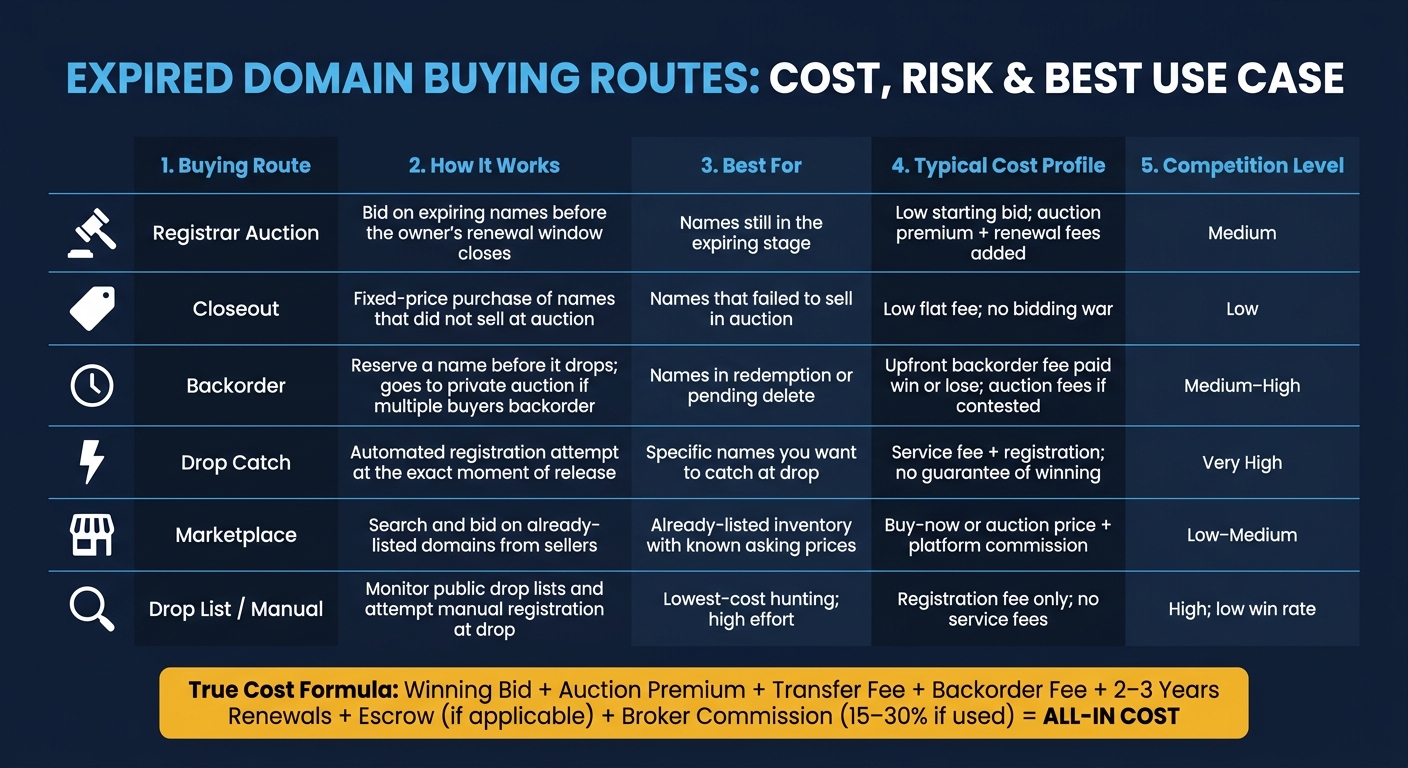
Expired Domain Buying Routes: Cost, Risk & Best Use Case
Expired domains show up through a few main buying paths: registrar auctions, backorders and drop catching, plus open marketplaces or public drop lists. The right path depends on where the domain is in its life cycle - still expiring, already dropped, or listed for sale after the registration period ends.
Registrar auctions and closeouts: GoDaddy Auctions and Dynadot
GoDaddy Auctions shows expiring domains while the current owner can still renew and keep the name. Buyers place bids during the auction window, and the top bidder gets the domain only if the owner does not renew. Dynadot works in much the same way, with its own auction inventory and closeout listings for domains that did not sell in auction. Closeouts are fixed-price, so there’s no bidding involved; the first buyer to check out gets the name.
Backorders and drop catching: NameJet, SnapNames, and DropCatch
NameJet and SnapNames let buyers place backorders before a domain drops. If more than one buyer places a backorder on the same domain, the name moves into a private auction between those buyers. DropCatch is built for drop catching, which means it tries to register a pending-delete domain the second it becomes available. Whether you win often comes down to how many other services are going after that same name.
If a domain is not listed for sale, buyers usually shift to auction platforms or backorder services. That’s where competition tends to heat up most: backorders and drop catching.
Marketplaces and drop lists: Sedo and manual drop tracking
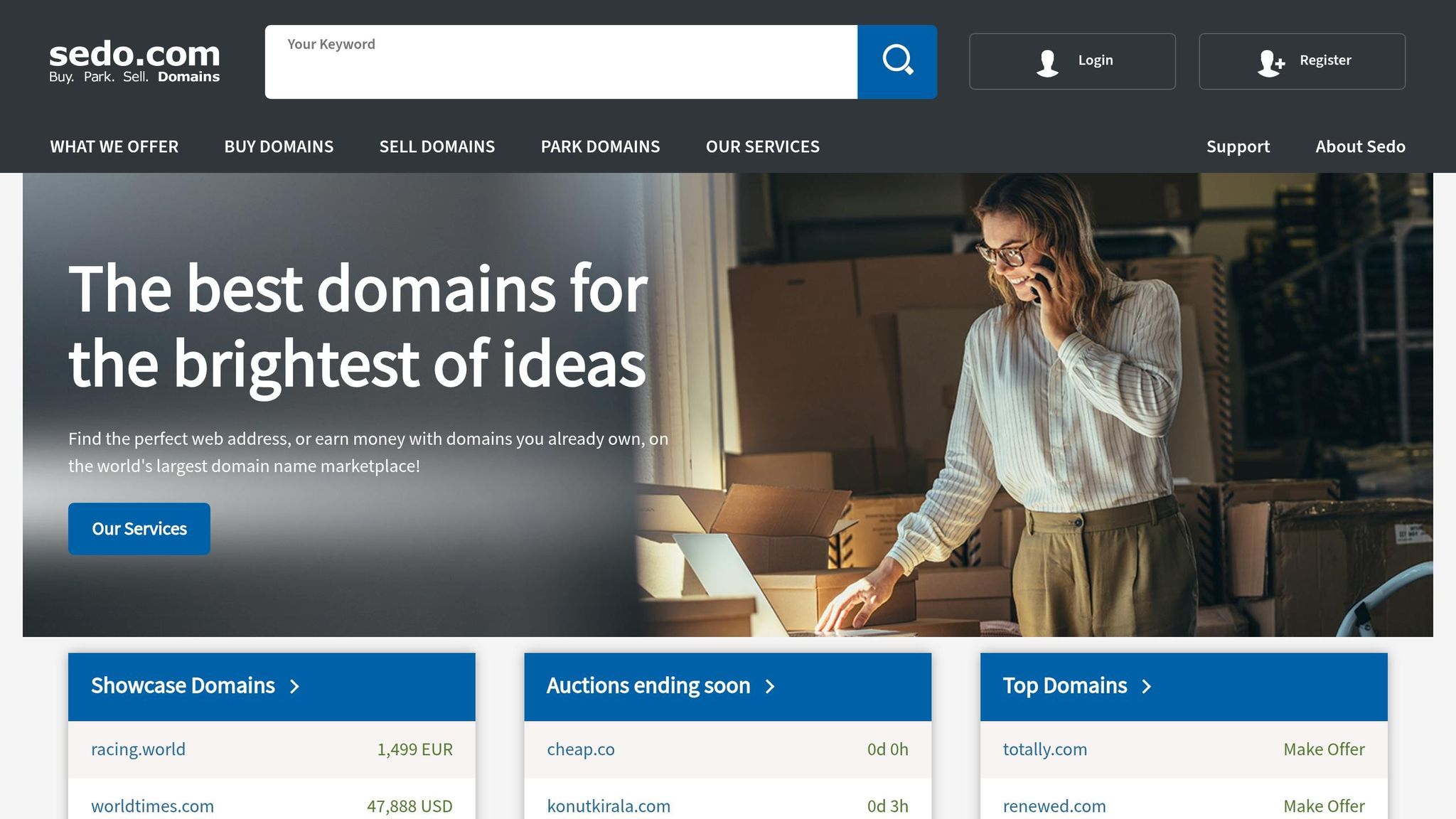
Sedo is a marketplace for domains that are already listed for sale. Buyers can search inventory, compare options, and bid on names that sellers have put on the market. Discovery is slower here because the inventory is passive - some domains can sit for years without an offer. If the domain you want is not listed, the next move is usually a backorder or drop-catching service.
Manual drop tracking means checking public drop lists and WHOIS data to spot domains nearing release, then trying to register them the moment they open up. The tradeoff is simple: low cost, heavy competition, and a low win rate.
| Route | How it works | Best for |
|---|---|---|
| Registrar auction | Bid on expiring names before the owner's renewal window closes | Names still in the expiring stage |
| Closeout | Fixed-price purchase of names that did not sell at auction | Names that have not sold in auction |
| Backorder | Reserve a name before it drops; goes to auction if multiple buyers backorder | Names in redemption or pending delete |
| Drop catch | Automated registration attempt at the moment of release | Names you want to catch at release |
| Marketplace | Search and bid on already-listed domains | Already-listed inventory |
| Drop list | Monitor public lists and attempt manual registration at drop | Lowest-cost hunting with low win rate |
What expired domains really cost beyond the listed price
The listed price is just the starting point. The real total usually includes auction premiums, backorder fees, transfer fees, renewals, escrow, and platform charges. And those add-ons change based on how you buy the domain.
GoDaddy Auctions, backorders, drop catching, and marketplace deals each come with their own fee stack. On top of that, your ceiling price should change based on your goal. A name you want for resale may justify one number. A name for SEO or outbound sales may justify another. Same domain, different math.
Direct costs: bids, backorders, renewals, transfers, and escrow
Each buying route adds its own charges on top of the winning bid or registration fee:
- Winning bid or registration fee - the number you see first, but rarely the final total
- Auction premium - some platforms add a percentage on top of the winning bid
- Backorder fee - paid upfront to reserve a name before it drops, whether you win or not
- Renewal - budget for the next renewal right after purchase; plan for at least two years
- Transfer fee - moving a domain to your registrar adds another charge
- Escrow fee - on higher-priced deals, escrow protects both sides but costs extra
- Platform fee - marketplaces and auction sites take a cut of the transaction
If you bring in a broker, add another 15%: 30% commission on top of the purchase price.
Indirect costs: competition, deposits, due diligence, and bad buys
The less obvious costs can sting even more.
If you plan to resell, holding costs add up over time. Renewals stack while the name sits, and the longer it stays unsold, the more exit risk you carry. A domain that looked cheap on day one can get expensive fast if it sits in your account for months or years.
Due diligence also costs time and money. Before you bid, check trademark risk and SEO history. Otherwise, you could end up paying for a name that brings legal trouble or already has a search penalty attached. That’s like buying a used car because the sticker price looks low, then finding out the engine’s shot.
For outbound buyers, time is its own expense. Manual outreach can take 20: 30 minutes per outreach attempt. If you’re contacting dozens of prospects, that labor becomes part of the deal whether you track it or not.
That’s how cheap-looking domains turn into expensive buys.
How to avoid pricing traps and pick the right buying route
Once you know the all-in cost, the next step is simple: avoid domains that look cheap but end up costing more than they should.
Common traps: inflated auctions, hidden renewals, weak SEO history, and trademark risk
Auction bidding can send a domain far past what it's worth on the resale market. It happens all the time. Before you go after any name, do a quick five-point check: brandability, search relevance and TLD fit, backlink quality and anchor text, indexed status, and trademark clearance. If the basics don't hold up, walk away.
Hidden renewal costs are another easy way to get burned. Some names seem cheap at first, then hit you with renewal pricing that changes the math. Read the platform terms before bidding, and bake the renewal cost into your max price.
If you're buying an aged domain for SEO, the backlink profile matters more than the age of the domain itself. A domain with spammy anchors or links from penalized sources can become a problem, not an asset. Check the Wayback history and backlink profile before you bid.
Matching your goal to the right sourcing channel
The right source depends on what you're trying to do with the domain: resale, SEO, or outbound.
| Buyer Goal | Best Sourcing Route | Expected Cost Profile | Vetting Depth |
|---|---|---|---|
| Resale inventory | Registrar auctions / Closeouts | Low up front; fees and renewals add up. | High: Check SEO and spam history |
| SEO value | Aged domain lists / Drop catching | Medium up front; bid and backorder fees add up. | Medium: Check trademark and history |
| End-user outbound | Registrar auctions / Closeouts | Low up front; fees and renewals add up. | High: Trademark check and buyer fit |
Closeouts and registrar auctions are usually the best fit when you want volume at a lower cost and can live with slower inbound sales. Backorders and drop catchers make more sense when you're chasing specific names with clean history and relevant links. But there's a catch: competition can push prices up fast, so your screening has to be tighter.
Buy-now marketplaces can also make sense when you need a specific name fast and the seller has already handled the screening work.
Using Speeder.ai after purchase to test demand faster
For outbound buyers, what happens after the purchase matters just as much as the buy itself. Holding costs start right away.
Once you acquire a domain, the speed at which you find a buyer shapes whether the deal was good or not. If the domain sits too long, your margin starts to shrink.
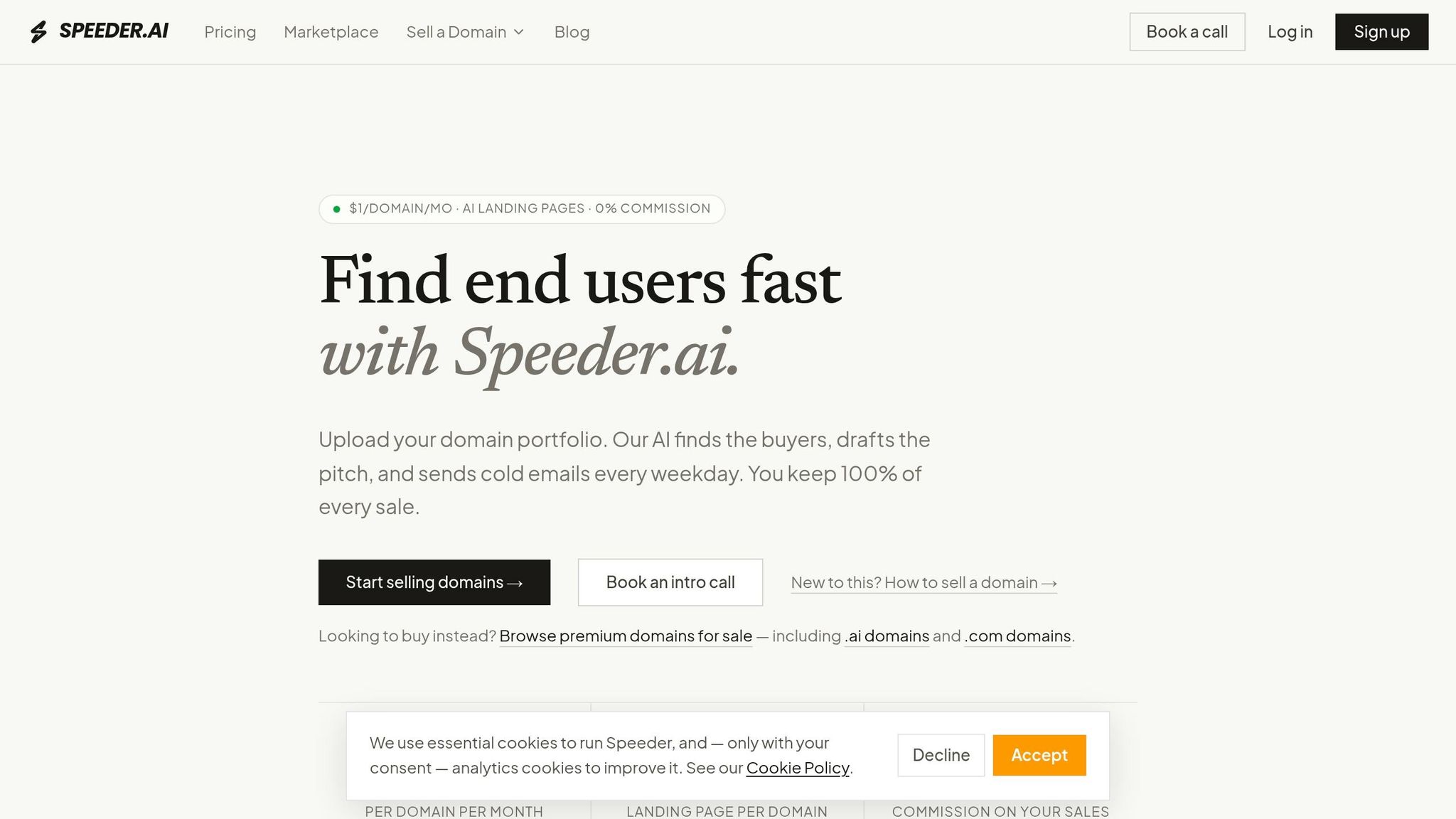
Speeder.ai is built to shorten that gap. After you upload a domain, Scout scans funding filings, trademark applications, and hiring signals to find companies that may be buyers. Courier then sends a personalized three-touch email sequence to the right decision-maker, not a generic info@ address. Concierge sends replies to your inbox so you can handle the negotiation yourself.
Speeder.ai charges $1 per domain per month with 0% commission, plus about $0.30: $0.50 per outreach email sent. Put that next to a broker taking 15%: 30% on a $10,000 sale, and you're giving up $1,500: $3,000 before you even get paid.
And the upside isn't only about spending less. The response data shows whether a domain has actual buyer interest or whether the purchase was a miss. That kind of feedback helps you get sharper about which sourcing channels and name types convert, so the next batch of buys is based on what the market is telling you.
Conclusion: Buy on all-in cost, not auction theater
Judge a domain buy by the all-in cost, not the hammer price. Premiums, renewals, transfers, and your own time can change the math fast.
Once you know your ceiling, pick the route that fits the domain’s stage. Use auctions for expiring names, backorders and drop-catching for pending-delete names, and marketplaces for names that are already listed.
Before you bid, run the full number: price + fees + 2: 3 years of renewals + transfer costs + due diligence time. If that total doesn’t leave enough margin for profit or use, lower your ceiling or walk away. Simple as that.
And set your max before the auction ends. The clock creates pressure. It doesn’t create value.
After the purchase, the next thing to think about is resale speed. For outbound flips, Speeder.ai can shorten the resale window by identifying likely buyers and automating outreach at $1 per domain per month with 0% commission.
FAQs
How do I know if an expired domain is worth buying?
Focus on whether the domain has real upside. Short, brandable names, commercial keywords, and market tailwinds can all support price growth.
It also helps to look at comparable sales and current market demand. A domain should have a clear business use, a clear user need, and a believable path to making money.
If those pieces aren’t there, the name may sound good on paper but fall flat when it’s time to sell or build on it.
What fees should I add beyond the auction or listing price?
Beyond the bid or listing price, factor in auction premiums, backorder or drop-catching fees, and required renewal charges.
Some platforms also add transfer fees or broker markups through a third party. Check the fee structure of your registrar or auction house before you buy, so the final price doesn’t come in higher than expected.
Which buying route is best for my goal?
The best buying route depends on your goal.
If you want to launch a business right away, the Speeder.ai marketplace is the most direct path. It offers premium, pre-vetted domains that already come with finished brand assets and landing pages. You also deal directly with the owner, which means no intermediary fees eating into your budget.
If you're building inventory to resell later, auction platforms and drop lists are more common. But there’s a catch: costs can climb fast once you add auction premiums, backorder fees, and bidding wars that push prices up. In that setup, it makes sense to focus on short, brandable names with commercial keywords. Those tend to be easier to market and easier to flip.